In Florida, air conditioning is less of a luxury and more of a daily necessity. Long stretches of heat, high humidity, and sudden weather changes can put considerable demands on a home cooling system. That makes regular maintenance and timely AC repair for Florida homes important for keeping indoor spaces comfortable and helping your equipment operate reliably.
The good news is that homeowners do not need to wait for a complete breakdown before paying attention to their AC. Knowing the warning signs, understanding basic maintenance, and knowing when to call a professional can help you address problems before they become bigger disruptions.
Why Florida’s Climate Is Tough on Air Conditioners
A Florida AC system has two important jobs: cooling the home and removing moisture from indoor air. Outdoor humidity can make a home feel uncomfortable even when the temperature itself does not seem extreme.
Air leaks around doors, windows, ducts, and other parts of the building envelope can also allow warm, humid outdoor air inside. The Florida Public Service Commission notes that moisture infiltration can add to the cooling load and make an air conditioner work harder.
That is why a system that runs constantly, struggles to maintain the thermostat setting, or leaves rooms feeling damp deserves attention. The problem may not simply be the age or capacity of the equipment; airflow, ductwork, coils, refrigerant, or humidity control could also be involved.
AC Repair for Florida Homes: Know the Warning Signs
Some AC problems are easy to recognize, while others develop gradually. Paying attention to changes in performance can help you decide when professional service is appropriate.
Common warning signs include:
- Weak or inconsistent airflow from vents
- Warm air coming from normally cold supply vents
- Rooms that remain hot while others are comfortable
- Unusual buzzing, rattling, grinding, or squealing
- Strange odors coming from the system
- Frequent cycling or unexpected shutdowns
- Indoor humidity that seems unusually high
- An unexplained increase in cooling costs
- Water around the indoor unit or drain area
These symptoms do not necessarily point to one specific fault. A dirty filter can restrict airflow, while a drainage problem, electrical issue, refrigerant problem, or malfunctioning component may require professional diagnosis.
The key is not to assume that a familiar symptom always has a familiar solution.
What Routine AC Maintenance Should Include
Regular maintenance is one of the simplest ways to stay ahead of avoidable cooling problems. The U.S. Department of Energy recommends routine checks and identifies filter replacement as an important maintenance task because clogged filters can reduce an air conditioner’s ability to absorb heat.
Homeowners can handle some basic tasks themselves. Check the filter regularly and replace or clean it according to the manufacturer’s instructions and the type of filter being used. Keep supply and return vents unobstructed, and make sure furniture, curtains, or other objects are not blocking airflow.
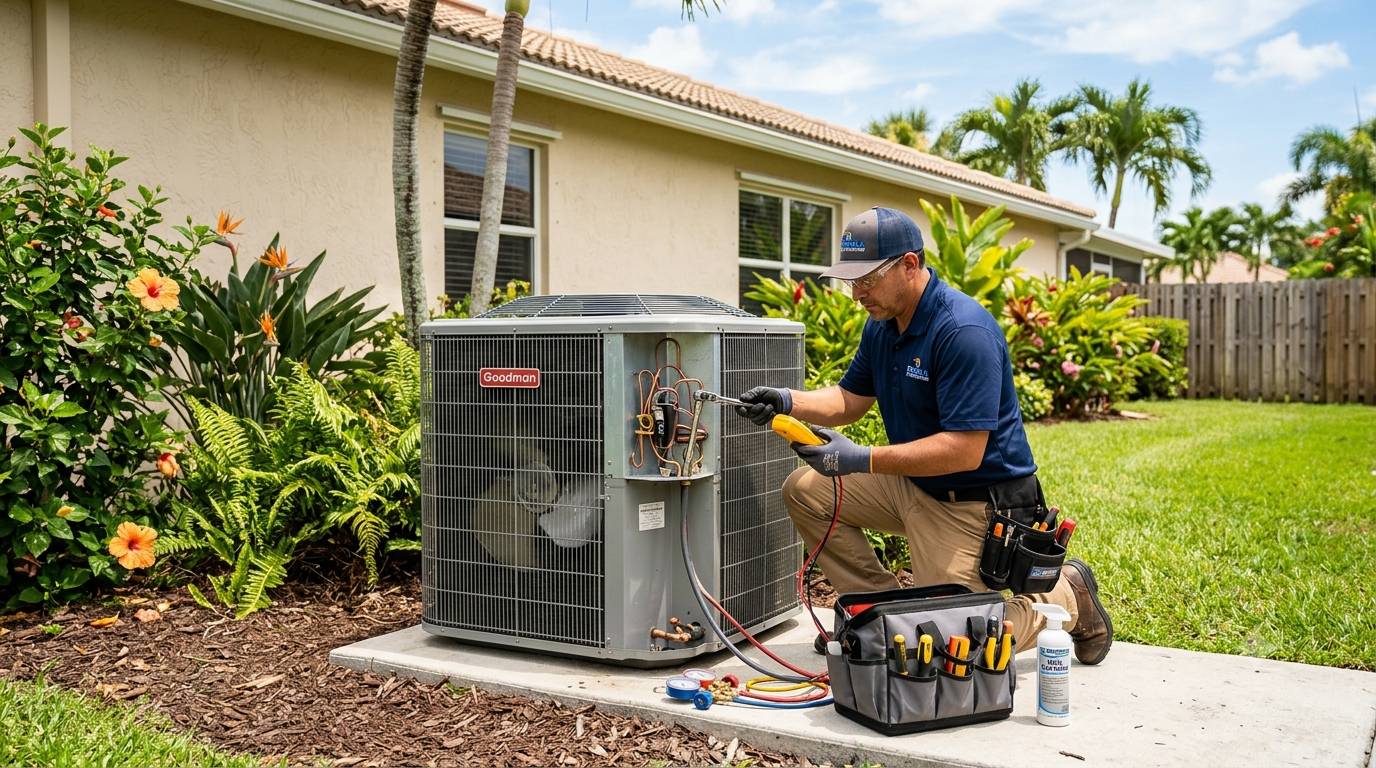
Professional maintenance goes further. A qualified HVAC technician can inspect system controls, coils, condensate components, airflow, electrical connections, and other parts that are difficult or unsafe for a homeowner to evaluate. Florida utility program documentation also identifies tasks such as checking refrigerant, inspecting coils and drain lines, and evaluating system operation as components of HVAC maintenance.
How Often Should You Maintain a Florida AC?
There is no single maintenance schedule that fits every household. Usage, system age, equipment type, indoor air conditions, pets, renovations, and the manufacturer’s recommendations can all influence how frequently attention is needed.
For many homeowners, arranging professional maintenance before periods of heavy cooling demand is a sensible approach. It gives a technician an opportunity to identify developing issues before the system is placed under sustained summer workload.
Your own filter may need more frequent attention than the rest of the system. A home with pets, construction activity, or particularly dusty conditions may accumulate debris faster than a cleaner, lightly occupied home.
Simple Things Homeowners Can Do Between Service Visits
Maintenance does not begin and end with a technician’s appointment. A few basic habits can help homeowners spot problems early.
Start by checking the air filter. A visibly dirty filter should not be ignored, but avoid automatically choosing the most restrictive filter available without considering your system’s specifications. Filters are designed for different applications, and the correct fit matters.
Also pay attention to changes in comfort. If one bedroom suddenly feels warmer than the rest of the house, or airflow seems weaker throughout the home, make a note of when the change began. Those details can help an HVAC professional troubleshoot the system more efficiently.
Keep the area around outdoor equipment reasonably clear of debris and vegetation, while avoiding any attempt to dismantle or repair electrical or refrigerant components yourself.
When Repair Makes More Sense Than Replacement
Not every struggling air conditioner needs to be replaced. A repair may be appropriate when the equipment is otherwise in good condition and the problem involves a serviceable component.
Replacement deserves consideration when an older system develops repeated problems, struggles to cool the home consistently, or no longer provides acceptable performance. The decision should consider more than the immediate repair price. Equipment condition, expected remaining service life, comfort, efficiency, and the likely cost of future repairs all matter.
Proper sizing is important, too. The Department of Energy notes that oversized air conditioners can cycle on and off too frequently and may provide poorer humidity removal.
A professional evaluation can help determine whether fixing the existing system or investing in a replacement is the more practical long-term choice.
Florida AC Maintenance Mistakes to Avoid
One of the most common mistakes is waiting until the system stops working completely. Small changes in airflow, cooling performance, noise, or humidity can provide useful clues before a major failure occurs.
Another mistake is treating every AC problem as a DIY project. Homeowners can safely handle straightforward tasks such as filter checks, but refrigerant, electrical components, motors, and other technical repairs should be left to qualified professionals.
Finally, do not judge system health solely by whether cold air is coming from the vents. An AC can still produce cool air while experiencing airflow, drainage, humidity, or efficiency problems.
Conclusion
Keeping a Florida home cool and comfortable requires more than simply turning down the thermostat. Consistent air conditioning maintenance and repair helps homeowners address developing problems, maintain reliable cooling, manage indoor humidity, and support the long-term performance of their HVAC equipment. Simple habits such as checking air filters, keeping vents unobstructed, monitoring airflow, and paying attention to unusual sounds or moisture can help identify potential problems early.
Professional HVAC service becomes particularly important when an air conditioner shows persistent performance issues or requires electrical, refrigerant, mechanical, or drainage repairs. Rather than waiting for a complete system breakdown, Florida homeowners can benefit from taking a proactive approach to AC care. By combining routine maintenance with timely professional diagnosis, homeowners can make informed decisions about repairs or replacement and keep their indoor environment comfortable throughout Florida’s demanding cooling season.