Introduction
Solar photovoltaic systems are designed to provide reliable renewable energy over many years, but long-term performance still depends on appropriate care. Panels, inverters, electrical connections, mounting systems, and monitoring equipment are continually exposed to changing environmental and operating conditions. While many developing problems may initially have little visible impact, they can gradually affect energy generation and system reliability. Professional support from ServiceMy can help homeowners assess their solar PV systems proactively, identifying potential concerns before they develop into more disruptive or expensive problems.
Preventative solar PV care is based on a simple principle: identifying changes early is generally preferable to waiting until the system experiences a noticeable failure. Regular monitoring and professional checks give homeowners greater visibility of system condition and help protect the performance of their renewable energy investment.
Small Solar PV Issues Can Develop Gradually
Not every solar PV problem results in an immediate system failure. In many cases, an installation may continue generating electricity while a component gradually becomes less efficient. This can make developing problems difficult for homeowners to recognise during everyday use.
Minor electrical concerns, inverter performance changes, environmental factors, or general component ageing may influence system output over time. Because solar generation naturally changes with seasons and weather conditions, a gradual decline can sometimes be mistaken for normal variation.
Preventative care creates opportunities to investigate unusual performance before the problem becomes more significant. Identifying the reason for a change early may help reduce the likelihood of prolonged efficiency loss or more extensive maintenance requirements later.
Monitoring Performance Provides an Early Warning
Regular performance monitoring is one of the simplest ways homeowners can maintain awareness of their solar PV system. Understanding typical generation patterns makes it easier to recognise when output appears unexpectedly low.
Daily variations are normal, and cloudy conditions will naturally affect electricity production. However, comparing performance over longer periods can reveal trends that deserve attention. A system producing noticeably less electricity than during comparable periods in previous years may benefit from further assessment.
Monitoring does not replace professional inspection, but it provides useful information that can indicate when a more detailed system check may be appropriate.
Preventative Checks Can Protect the Inverter
The inverter is an essential part of a solar PV system because it converts electricity generated by the panels into a form that can be used within the property. Its performance therefore has a direct influence on the effectiveness of the entire installation.
Homeowners may occasionally notice warning indicators, unusual monitoring information, or unexpected changes in energy generation when inverter performance is affected. Ignoring these signs could allow reduced system performance to continue unnecessarily.
Preventative assessment helps ensure inverter operation is considered alongside the condition of the panels and other system components. A whole-system approach matters because efficient panels alone cannot guarantee optimum electricity generation if another part of the installation is underperforming.
Electrical Connections Require Long-Term Attention
Solar PV installations contain electrical connections that remain in operation for many years. Although systems are designed for long-term use, environmental exposure and normal ageing mean components should not automatically be assumed to remain unchanged throughout the installation’s entire lifespan.
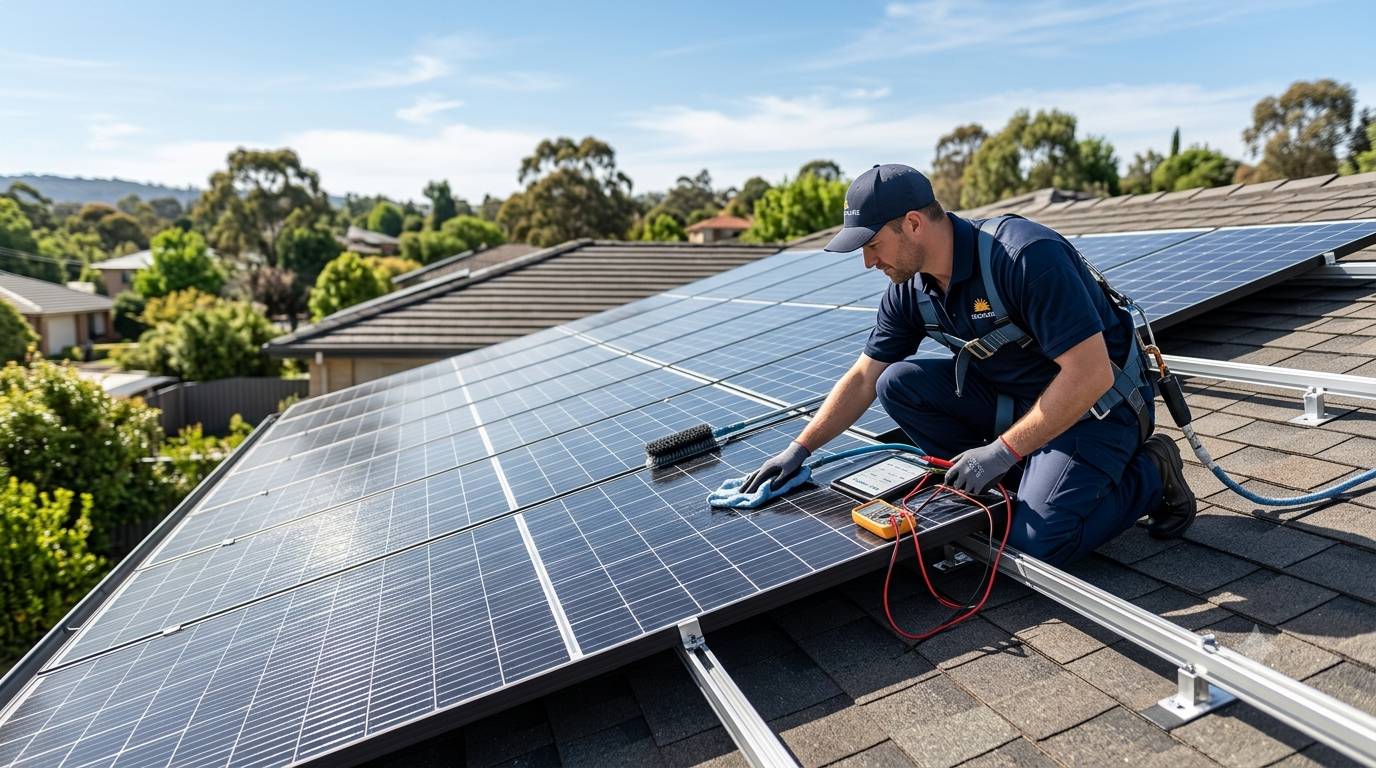
Professional inspections can assess relevant parts of the system and identify areas that may require further attention. This is particularly important because electrical concerns may not be visible to homeowners through ordinary observation.
Homeowners should avoid attempting electrical repairs or detailed technical inspections themselves. A professional assessment provides a safer, more reliable way to understand the system’s condition.
Weather Can Affect Solar Installations Over Time
Solar panels spend their entire operational life outdoors. They are exposed to rain, wind, temperature fluctuations, airborne pollution, vegetation, and other environmental conditions year-round.
Solar equipment is designed to withstand outdoor conditions, but preventative care remains valuable because environmental exposure can influence different parts of an installation over time. Changes around the property can also affect performance. Trees may grow and create additional shading, while nearby development could alter the amount of sunlight reaching certain panels.
Periodically checking both the system’s condition and its surrounding environment can help homeowners identify factors that may be reducing energy generation.
Early Attention Can Help Limit Performance Loss
A solar PV system does not necessarily need to stop working completely for a problem to become financially important. Even a relatively modest reduction in efficiency can affect the amount of renewable electricity generated over an extended period.
Lower generation may mean the household needs to purchase more electricity from the grid. If reduced performance goes unnoticed for months, the effect on expected energy savings can add up.
Preventative care helps homeowners investigate unusual changes sooner. Maintaining efficient generation supports the financial benefits that encouraged many households to invest in solar technology in the first place.
Preventative Care Supports Better Maintenance Planning
Unexpected problems can be inconvenient because they often require homeowners to arrange inspections or repairs at short notice. Preventative care provides a more organised alternative.
Regular checks help homeowners better understand the system’s condition and identify areas that may need attention in the future. Maintenance can then be considered as part of planned system management rather than only after a significant fault occurs.
This proactive approach can also make it easier to maintain records of inspections, previous maintenance, and performance changes. Such information can be valuable when assessing future system requirements.
Protecting the Long-Term Solar Investment
Installing a solar PV system represents a substantial household investment. The financial value of that investment depends partly on how consistently the system continues generating electricity throughout its operational life.
Preventative care helps protect this value by supporting efficient operation and identifying developing concerns before they unnecessarily affect performance. Reliable generation lets homeowners keep benefiting from renewable electricity while reducing dependence on grid energy.
Looking after the system should therefore be seen as protecting the original investment rather than simply an additional household maintenance task.
Supporting Long-Term System Reliability
Reliability becomes increasingly important as solar PV systems age. Although individual components may have different expected service lives, the objective is to keep the overall installation functioning effectively for as long as practical.
Preventative checks can help homeowners understand how their system is ageing and whether any components require additional attention. This information supports more informed decisions about maintenance and future upgrades.
Rather than waiting for equipment to fail unexpectedly, homeowners can respond to changes in a more controlled way.
Maintaining the Environmental Benefits of Solar Energy
Solar PV systems are installed not only for financial reasons but also because they allow households to generate renewable electricity. Maintaining efficient performance therefore supports the installation’s environmental benefits.
When a system generates electricity effectively, homeowners can maximise the amount of household energy supplied through solar generation. If performance drops unnecessarily, reliance on grid electricity may increase.
Preventative care helps homeowners make better use of the renewable energy infrastructure already installed on their property, supporting both long-term efficiency and wider sustainability objectives.
Frequently Asked Questions (FAQs)
What is preventative solar PV care?
Preventative care involves monitoring system performance and arranging appropriate inspections to identify developing concerns before they become larger operational problems.
Can a solar PV system have a problem even if it is still generating electricity?
Yes. Some issues may reduce efficiency without causing complete system failure, which is why monitoring performance over time can be useful.
How can homeowners identify reduced solar performance?
Unexpected or sustained changes in energy generation compared with typical performance may indicate that further assessment is worthwhile.
Can preventative care help protect solar energy savings?
Maintaining efficient system performance helps maximise renewable electricity generation, supporting long-term household energy savings.
Should homeowners inspect solar PV electrical components themselves?
No. Technical and electrical assessments should be carried out by appropriately qualified professionals.
Conclusion
Preventative solar PV care helps homeowners move from reacting to faults towards actively protecting system performance. Monitoring energy generation, watching for changes, and arranging professional assessments when appropriate can help identify developing concerns before they cause prolonged efficiency loss or more significant problems.
A proactive approach also supports better maintenance planning, long-term reliability, financial savings, and renewable energy generation. By giving the entire solar PV system appropriate attention throughout its operational life, homeowners can protect their investment while continuing to benefit from dependable solar energy for years to come.