Water is one of the most valuable resources in any home, yet it’s surprisingly easy to waste without realizing it. From small leaks to everyday habits, gallons of water can disappear every week, increasing utility bills and putting unnecessary strain on local water supplies. The good news is that reducing water waste doesn’t always require expensive renovations or major plumbing projects.
If you’ve noticed rising water bills or simply want to make your household more environmentally responsible, simple daily changes can have a significant impact. And if you suspect hidden leaks or recurring plumbing issues, contacting a plumbing service in Henderson, NV can help identify problems that may be wasting far more water than expected.
Fix Small Leaks Before They Become Bigger Problems
A dripping faucet may seem insignificant, but even a slow drip can waste hundreds or even thousands of gallons of water over the course of a year. The same applies to running toilets, leaking hose bibs, or small pipe leaks hidden beneath sinks.
Many homeowners delay repairs because the leak appears minor. However, these small issues rarely resolve themselves and often become more expensive over time.
Take a few minutes every month to inspect:
- Kitchen and bathroom faucets
- Toilet tanks and bowls
- Under-sink plumbing
- Outdoor hose connections
- Water heater connections
Addressing leaks early helps conserve water while preventing costly water damage.
Turn Off the Tap During Everyday Tasks
One of the easiest ways to reduce water waste is simply turning off the faucet when running water isn’t necessary.
Consider common habits such as:
- Brushing your teeth
- Shaving
- Washing your face
- Scrubbing dishes before rinsing
Instead of letting water flow continuously, use it only when needed. These small adjustments take almost no effort yet can save thousands of gallons annually across an entire household.
Run Full Loads Only
Dishwashers and washing machines are designed to operate efficiently when fully loaded.
Running half-full appliances wastes:
- Water
- Electricity
- Detergent
Rather than washing small loads throughout the week, wait until you have a full load whenever practical. Modern appliances often include eco-settings that further reduce water consumption without sacrificing cleaning performance.
Shorten Shower Time
Long showers are one of the largest sources of indoor water use.
Cutting just two or three minutes from each shower can result in substantial yearly savings.
Helpful ways to shorten showers include:
- Setting a timer
- Playing one short song
- Preparing towels and clothes beforehand
- Turning off water while applying shampoo or conditioner
These adjustments require no remodeling yet immediately reduce water usage.
Water Your Lawn More Efficiently
Outdoor irrigation often accounts for a large percentage of residential water consumption, especially during warmer months.
Instead of watering during the hottest part of the day, choose early morning or evening when evaporation is much lower.
Additional tips include:
- Water deeply but less frequently
- Adjust sprinklers to avoid sidewalks and driveways
- Skip watering after rainfall
- Use mulch around plants to retain moisture
Healthy landscaping doesn’t necessarily require excessive watering.
Collect Rainwater When Possible
Rainwater can be useful for watering gardens, flowers, shrubs, and outdoor plants.
Installing a simple rain barrel beneath a gutter downspout allows homeowners to capture water that would otherwise flow away unused.
Depending on local regulations, collected rainwater can reduce demand on municipal water systems while lowering outdoor water use.
Upgrade Small Fixtures Instead of Entire Systems
Major plumbing renovations aren’t always necessary to improve water efficiency.
Affordable replacements such as:
- Low-flow showerheads
- Faucet aerators
- Efficient toilet flappers
- Water-saving hose nozzles
can significantly reduce consumption while maintaining comfortable water pressure.
These inexpensive upgrades are often installed in minutes and pay for themselves through lower utility bills.
Be Smart About Kitchen Water Use
The kitchen presents many opportunities to save water through better habits.
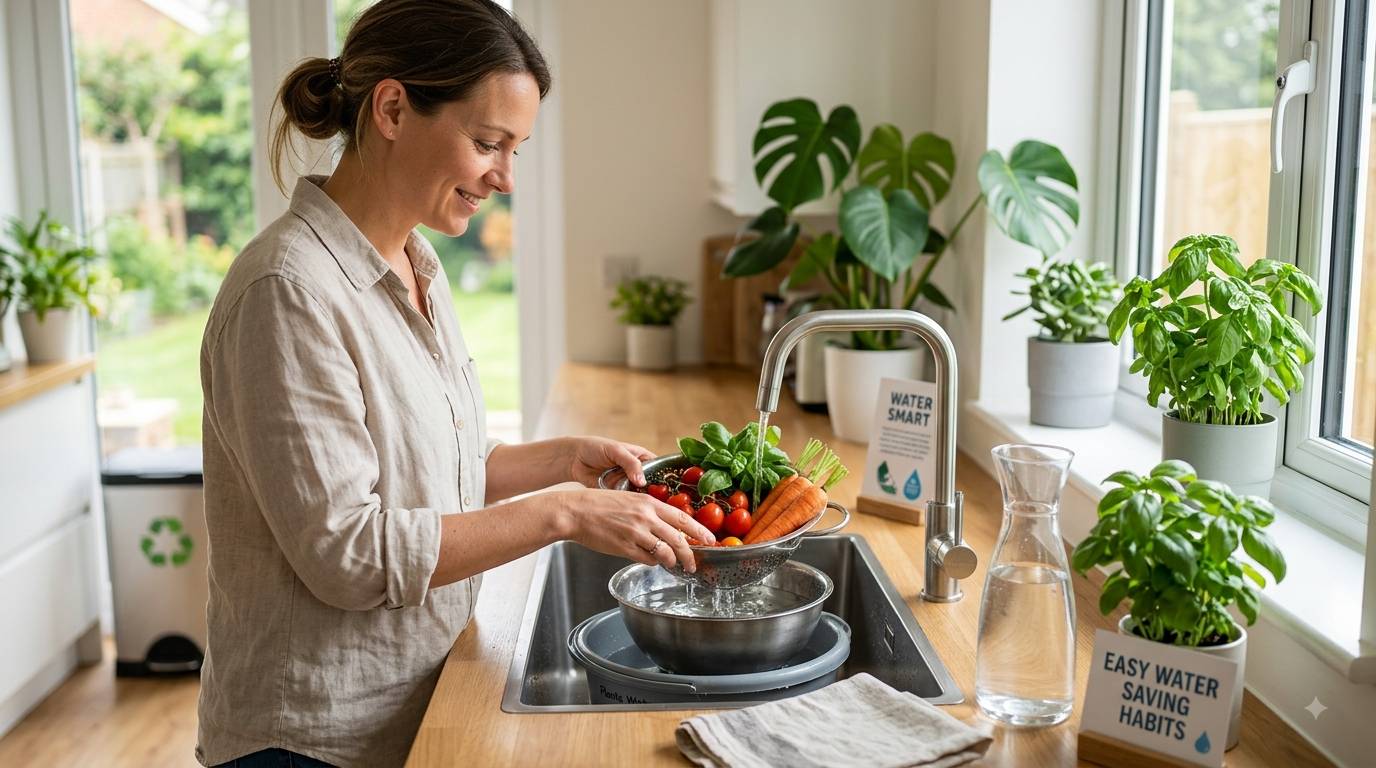
Instead of rinsing produce under constantly running water, fill a bowl with water for washing fruits and vegetables.
Similarly:
- Thaw frozen foods in the refrigerator instead of under running water.
- Keep drinking water in the refrigerator rather than running the faucet until it becomes cold.
- Scrape food into the trash or compost before loading the dishwasher instead of pre-rinsing every plate.
These small changes quickly become routine and reduce unnecessary waste.
Check Your Toilet for Hidden Leaks
Toilets are among the most common sources of hidden water waste.
A leaking toilet may continue running silently for weeks without obvious signs.
An easy test involves placing several drops of food coloring into the tank. Wait about 15 minutes without flushing. If color appears in the bowl, the toilet has a leak that should be repaired.
Replacing worn flappers or fill valves is often inexpensive and can prevent significant water loss.
Use Outdoor Hoses Wisely
Garden hoses are convenient but can waste considerable water if left running unattended.
When washing vehicles, patios, or outdoor furniture:
- Use a spray nozzle with automatic shutoff.
- Sweep driveways instead of hosing them off.
- Wash cars on the lawn whenever appropriate so excess water benefits the grass.
These simple practices help conserve water without reducing convenience.
Monitor Your Water Bill
One of the easiest ways to detect hidden water waste is by reviewing your monthly water bill.
A sudden increase in usage without changes in household habits often indicates an unseen problem.
Keep track of:
- Monthly consumption
- Seasonal changes
- Unexpected spikes
- Consistent upward trends
Early detection allows homeowners to investigate before small issues become costly repairs.
Encourage Water-Saving Habits Throughout the Household
Reducing water waste works best when everyone participates.
Simple reminders can make a lasting difference:
- Turn off faucets completely.
- Report leaks immediately.
- Take shorter showers.
- Run appliances only when full.
- Water plants responsibly.
Teaching children these habits also helps build lifelong conservation practices.
Final Thoughts
Reducing water waste doesn’t have to involve costly remodeling projects or extensive plumbing upgrades. Simple actions like repairing leaks, shortening shower times, using water-efficient fixtures, running full appliance loads, and practicing mindful water use can collectively save thousands of gallons of water each year. These easy improvements not only lower water bills but also help protect valuable natural resources for the future.
Regular inspections and prompt repairs are equally important, as even small plumbing problems can lead to significant water loss over time. By adopting these practical water-saving strategies and staying proactive about home maintenance, homeowners can enjoy a more efficient plumbing system, reduce unnecessary expenses, and contribute to a more sustainable lifestyle without sacrificing everyday comfort.